
In the early days of WhatsApp number screening, many teams had a simple goal, which was to filter out empty numbers and ensure that the numbers could be used. However, as the scale of data becomes larger and larger, this single filtering method is no longer sufficient.
Now many teams will find that even if the number has been registered and can be reached, the actual effect is still unstable. Some accounts barely respond, and some even bring risks during use. This change directly promotes the screening process from "single detection" to "multi-dimensional screening".
Core issues solved by early screening
The initial screening logic mainly revolves around one goal, which is to determine whether the number exists.
Through empty number detection, unregistered numbers can be filtered out to avoid invalid sending. This step really solves the most basic problem and takes the data from completely messy to "at least usable".
But as the use deepens, this layer gradually becomes insufficient, because "usable" does not mean "effective".
Why a single filter is no longer enough
In the current environment, data disparities are increasingly evident. Merely judging the registration status cannot distinguish the quality of users.
They are also registered users, some have not used it for a long time, and some are very active.
Some accounts are in normal status, while others have abnormalities or risks.
Some users will generate feedback, while others will be completely silent.
Without further screening, these differences will directly affect the reach and make the overall results unstable.
What capabilities are being added to multidimensional inspections?
In order to deal with these problems, the screening process began to introduce more dimensions instead of just looking at one condition.
Commonly added dimensions include:
Activity recognition, used to determine whether the user is using it
Account status identification, used to filter abnormal or risky accounts
Equipment or environment information to assist in judging user quality
These dimensions combined together can describe a user more completely, rather than just "whether to register or not".
What's happening to the screening process?
From a process perspective, screening numbers have changed from single-point judgment to multi-layer screening.
It used to be:
Check whether it is registered → use it if available
Now closer:
Check registration status → filter active users → filter abnormal accounts → then enter and use
This change gradually changes the data from "usable" to "closer to valid".
The impact of multidimensional screening on results
When the filtering dimensions are increased, the data will undergo a significant change. The overall volume will decrease, but the structure will be more concentrated.
The originally mixed data is compressed into a group of users who are more likely to generate feedback. When reached, information is easier to see and overall efficiency increases.
This change is not about reducing traffic, but reducing invalid traffic.
Amman is more suitable for multi-dimensional screening when used
In actual operation, if multi-dimensional screening is completed in steps, it will increase complexity and lead to inconsistent results. A more practical way is to complete the detection of multiple dimensions in one round of processing.
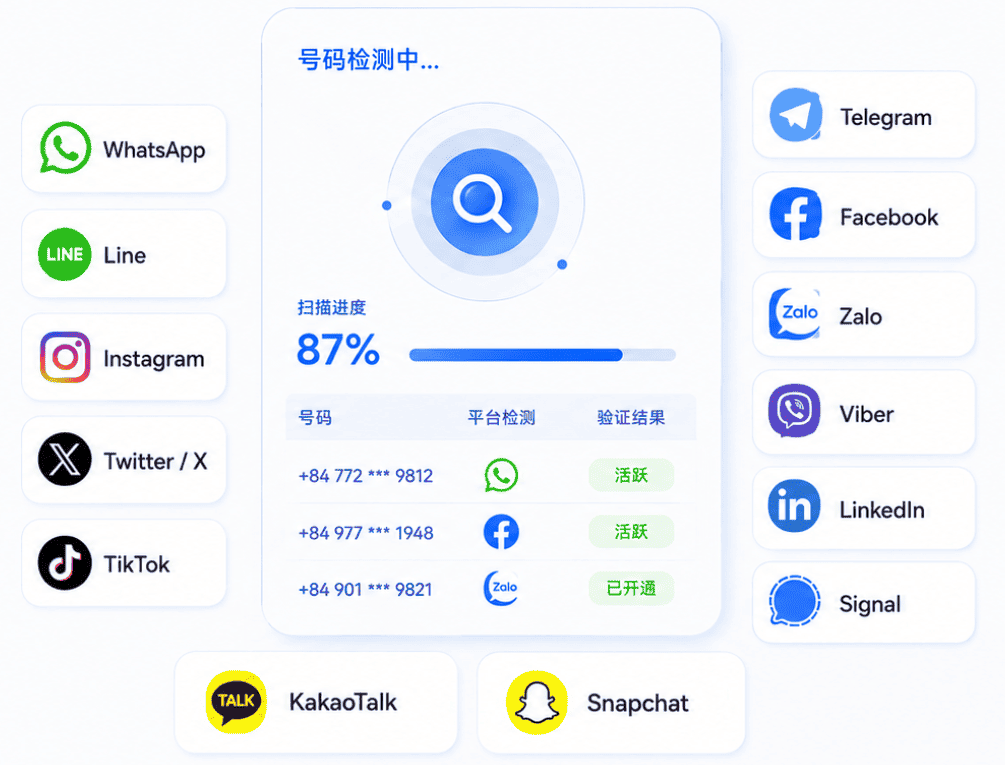
Through Amman, you can perform batch detection on numbers and identify WhatsApp registration status, activity and account status at the same time. This allows multi-dimensional screening to be integrated into one process, allowing the data to be sorted before being used.
This approach is better suited for teams that need to process data on an ongoing basis, rather than filtering through it all at once.
Screen numbers move from "usable" to "more accurate"
The current changes in the screening process are essentially moving from basic judgment to refined screening. Only filtering empty numbers can no longer meet the demand, and data quality must be improved through multi-dimensional detection.
When the filter number is no longer just to judge the existence, but can distinguish the quality of users, the use value of the data will be truly reflected.
Amman is the world's leading number screening platform, providing global customers with batch number screening and testing services covering 236 countries. The platform currently supports more than 40 mainstream social networking and applications, including WhatsApp, Line, Twitter, Facebook, Instagram, LinkedIn, Viber, Zalo, Binance, Signal, etc., adapting to the needs of multiple scenarios.
The main core functions cover multi-dimensional precise screening such as activation, activity, interaction, gender, avatar, age, online, accuracy, empty account, mobile phone device, etc., and can flexibly meet the needs of different users. Its core advantage is to integrate global mainstream social and application resources to provide users with one-stop, real-time and efficient number precision screening services, helping customers achieve global digital layout.
It is a common choice for all professional teams to complete rational screening before actually reaching users.
Editor abcheck has a lot of experience, welcome to communicate with me, click to contact @Tg8189