
When it comes to acquiring customers on WhatsApp in Malaysia, there are usually not many inquiries brought about by advertising, but many leads stop after the first round of communication and are not continued. It seems to be customer churn, but in fact it is more that the follow-up rhythm and method do not match the user status. Advertising only brings people in; what really determines conversion is the follow-up actions.
After the first round of replies, why don’t users continue communicating?
Advertisements often consult users with some interest, but this interest is short-lived. If guidance is not continued after the first round of responses, users can easily break off communication.
Common situations include:
- No follow-up after reply
- Too much information is given, and the user does not know the next step
- The pace is too slow and users have turned to other channels
These situations will gradually lead to the loss of users who originally had potential needs.
The first step after clues come in
After the user enters WhatsApp, it is not recommended to reply directly, but to make a basic judgment first.
It can be simply divided into several categories:
- Users with clear needs
- Users who are interested but unsure
- Users who are just consulting or testing
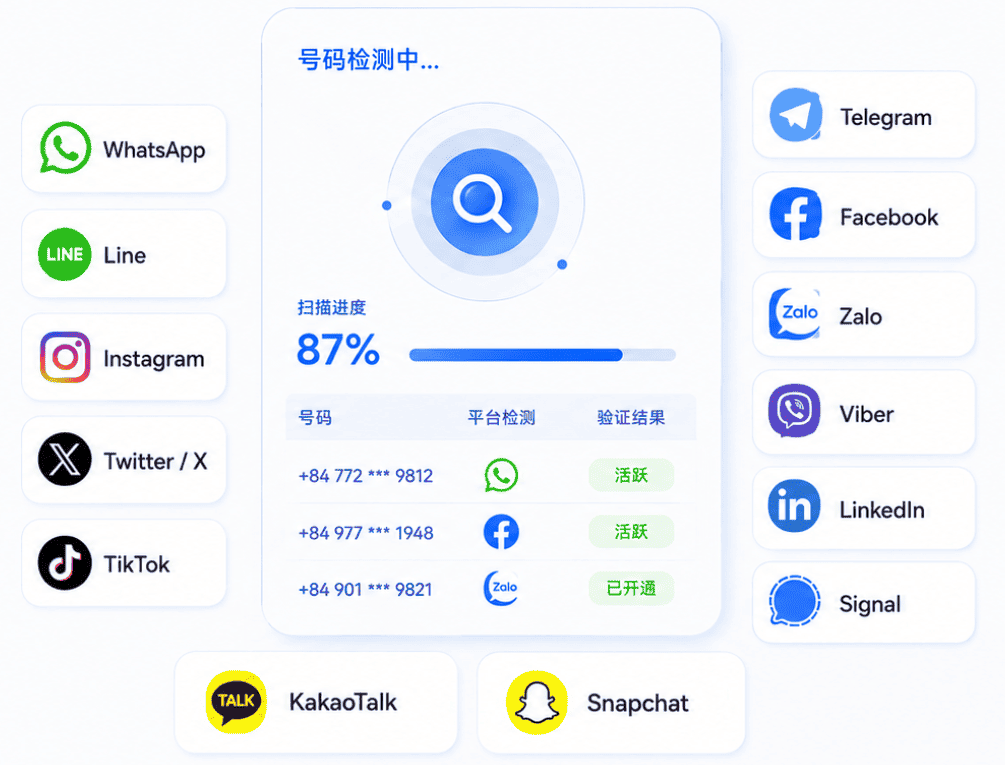
Through Amman's detection of the number's activation status and activity, it can help determine whether the user is a real user, and then further layer it based on the chat content.
This avoids focusing on low-quality leads.
The timing of the second follow-up
Follow-up time is more important than content. If the rhythm is wrong, no matter how good the content is, it will be difficult to work.
A more efficient rhythm is:
- After the first round of responses, additional information will be provided within a short period of time.
- If no response, conduct a second contact within 24 hours
- Make a light reminder in 2 to 3 days
The core of this rhythm is to maintain a sense of presence without frequent interruption.
If the interval is too long, users have lost interest; if it is too frequent, it is easy to be ignored.
How should secondary follow-up content be designed?
The second follow-up is not to repeat the first content, but to provide new reasons for users to continue communicating.
You can start from several directions:
- Supplement key information rather than repeating it
- Provide usage scenarios to make it easier for users to substitute
- Guide simple actions, such as replying to keywords or selecting
For example, instead of asking directly if they want something, give them two options to make it easier for users to respond.
Layered follow-up is more effective than unified follow-up
Different users have different statuses, and if they are followed up uniformly, it will be difficult to take into account the effects.
Can be simply layered:
- High-intent users, quickly promote communication
- Medium intention users, guided step by step through content
- Low-intent users, reduce frequency or delay processing
Active users screened by Amman can be given priority to enter the high-frequency follow-up process, while low-active users can reduce investment.
Why advertising leads need to be screened again
Many teams will assume that advertising leads are valid, but this is not the case.
Among the users brought by advertisements, there will be:
- non-target group
- Low active users
- Users without actual needs
If screening is not done, customer service resources will be dispersed, affecting overall efficiency.
Through Amman, you can quickly determine the number status after the user enters, filter out invalid or low-quality users in advance, and make subsequent follow-up more focused.
The role of Amman in the follow-up process
In a market like Malaysia, where WhatsApp is used more frequently, screening and follow-up need to be used in combination.
When amman can be done on the front end:
- WhatsApp activation detection
- Activity recognition
- Data label output
This information can be directly used for hierarchical follow-up, such as assigning high-active users to manual customer service first, while low-active users enter the automatic reply process.
It also supports batch processing and API access, allowing each batch of advertising leads to complete basic screening when entering the system instead of processing them later.
The core of follow-up is rhythm and object matching
The consultations brought by advertising already have a certain value, but if the follow-up method does not match the user status, it will be difficult to convert this value.
Determining the quality of users through screening, and then following up at different paces can make each contact more targeted, instead of repeatedly consuming the same batch of leads.
Amman is the world's leading number screening platform, providing global customers with batch number screening and testing services covering 236 countries. The platform currently supports more than 40 mainstream social networking and applications, including WhatsApp, Line, Twitter, Facebook, Instagram, LinkedIn, Viber, Zalo, Binance, Signal, etc., adapting to the needs of multiple scenarios.
The main core functions cover multi-dimensional precise screening such as activation, activity, interaction, gender, avatar, age, online, accuracy, empty account, mobile phone device, etc., and can flexibly meet the needs of different users. Its core advantage is to integrate global mainstream social and application resources to provide users with one-stop, real-time and efficient number precision screening services, helping customers achieve global digital layout.
It is a common choice for all professional teams to complete rational screening before actually reaching users.
Editor abcheck has a lot of experience, welcome to communicate with me, click to contact @Tg8189