
When screening U.S. numbers, many teams will notice a change: for the same registered numbers, the performance differences between different types of numbers in actual use are becoming more and more obvious. Some numbers are stable, while others are often unresponsive, or even appear abnormal during use.
It’s not just activity that’s the problem, it’s the type of number itself that starts to affect the results. T-card, virtual card and physical card, these three types of numbers need to be treated separately in the current environment.
Why number type started affecting filter results
In the past, number screening focused more on whether it was registered and active, but as the scale of data expanded, number sources became more complex. Different types of numbers have differences in usage habits, stability, and even life cycles.
If you do not distinguish between number types and use them directly, the result will be unstable. In the same batch of data, some perform very well, and some have no feedback at all. It is difficult to determine the reason.
Therefore, number type begins to become an important dimension in screening.
The basic differences between the three types of numbers
From the perspective of actual use, these three types of numbers can be simply understood as users from different sources.
Physical cards usually correspond to real user devices, are used for a longer period of time, and behave closer to normal users.
Virtual cards are mostly generated from the network or temporary usage scenarios, with short usage cycles and large fluctuations in stability.
The T card is a specific type of number for the operator. It is commonly used in some scenarios, and its performance is somewhere in between.
These differences directly affect subsequent reach effects.
Stability comparison: the core basis for prioritization
When prioritizing, the most important thing is not quantity, but stability.
From the overall performance point of view:
Physical cards have the highest stability and are more suitable for long-term use.
T card performance is average and can be used as supplementary data
Virtual cards fluctuate greatly and are more suitable for testing or short-term use.
This sorting is not a fixed rule, but it has reference significance in most scenarios.
Why can’t we just look at the number type?
It should be noted that the number type is only a basic condition and does not completely determine the result.
If a virtual card user is active for a long time, the actual effect may be better than that of a physical card user with low activity. Therefore, when filtering, you cannot only rely on type judgment, but also need to combine other dimensions.
A more reasonable way is to use number type as the first level of classification, and then superimpose activity and account status for screening.
Priority adjustment under different business scenarios
In different services, the number priority can be adjusted accordingly.
During the testing phase, virtual cards can be used appropriately to reduce costs and quickly verify directions.
In the conversion stage, it is more suitable to give priority to physical cards and high-activity T cards to improve the success rate.
In the long-term operation stage, it is necessary to focus on stable numbers and reduce fluctuations.
This phased use method is more flexible than fixed sorting.
It is more straightforward to use Amman to identify number types.
In actual screening, relying on manual identification of number types is not only inefficient but also error-prone. A more practical way is to complete classification through systematic identification.
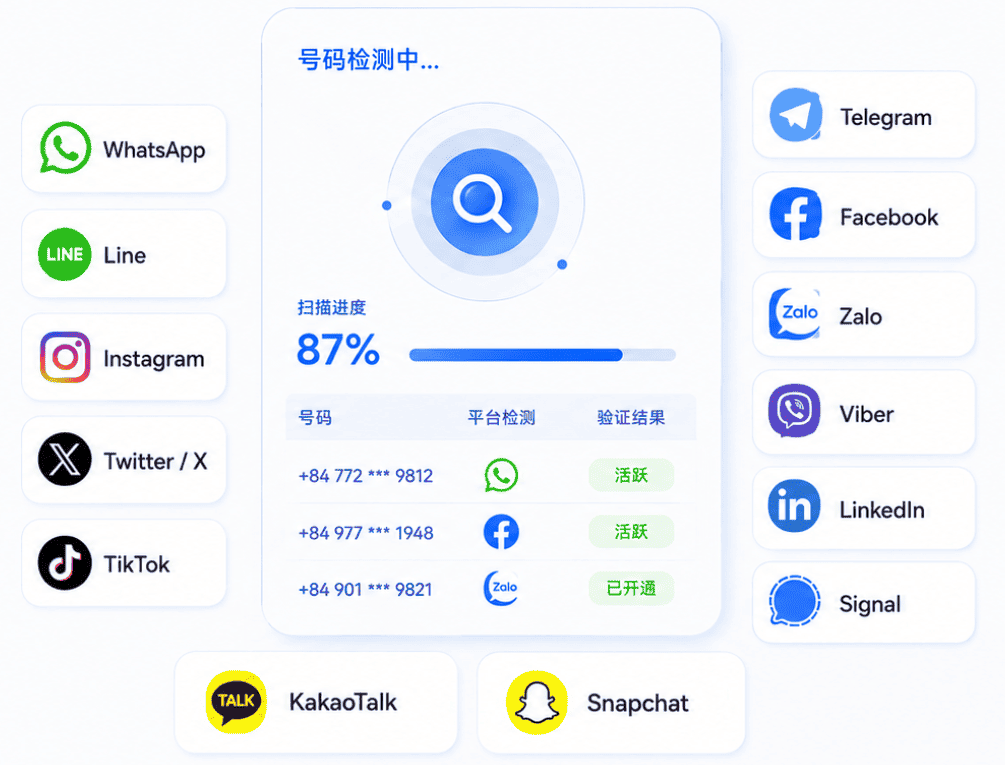
Through Amman, you can perform batch detection on numbers, identify operator information and number types, and filter based on registration status and activity. This allows data to be stratified by type and quality in one round of processing, rather than mixed.
This approach makes it easier to maintain stability for teams that need to deal with U.S. numbers on an ongoing basis.
The essence of priority is to reduce uncertainty
Number prioritization is not intended to limit choices, but to make the results more controllable.
When physical cards, T cards, and virtual cards are used separately, the data structure will be clearer. The performance of each type of numbers is easier to judge, and it is easier to adjust strategies based on the results.
Compared with mixed use, this approach can significantly reduce uncertainty and allow screening and use to form a stable cycle.
Amman is the world's leading number screening platform, providing global customers with batch number screening and testing services covering 236 countries. The platform currently supports more than 40 mainstream social networking and applications, including WhatsApp, Line, Twitter, Facebook, Instagram, LinkedIn, Viber, Zalo, Binance, Signal, etc., adapting to the needs of multiple scenarios.
The main core functions cover multi-dimensional precise screening such as activation, activity, interaction, gender, avatar, age, online, accuracy, empty account, mobile phone device, etc., and can flexibly meet the needs of different users. Its core advantage is to integrate global mainstream social and application resources to provide users with one-stop, real-time and efficient number precision screening services, helping customers achieve global digital layout.
It is a common choice for all professional teams to complete rational screening before actually reaching users.
Editor abcheck has a lot of experience, welcome to communicate with me, click to contact @Tg8189