
When screening numbers, many people only look at one condition at first, such as whether they are registered or only their activity level. Although this is simple, the data filtered out are often unstable and will fluctuate significantly when used.
A more practical approach is to use multiple dimensions together to filter the data from different angles. The combination of these three dimensions, device type, operator, and activity level, can basically filter a batch of data closer to real users.
Why a single filter condition is prone to problems
Filtering with only one condition seems to be efficient, but there will be obvious deviations.
- If you only look at the registration status, a large number of low-active users will be mixed in.
- Only looking at activity may ignore device or network environment issues
- Just look at the region or operator, and you can’t tell whether the user is using it
These situations will make the data appear to "qualify", but the actual use effect will be unstable.
By superimposing multiple dimensions, these errors can be gradually filtered out.
Device type determines the user’s usage environment
Device type is a very intuitive filtering condition that can roughly determine the user's usage environment.
For example, you can distinguish:
- iOS device users
- Android device users
Users of different devices will have different usage habits and environments. In some scenarios, the device type itself is a filtering condition, such as testing or launching only for a certain system user.
Including device type in the filter can make the data more targeted, rather than a mixed batch of users.
Operator information can help determine the quality of the number
The operator dimension is mainly used to determine the basic situation of the number.
For example:
- Is it a mainstream operator?
- Is it in the target area?
- Is the network environment stable?
This information itself will not directly determine the effect, but can be used as an auxiliary judgment to help filter out some abnormal or unmatched data.
This dimension will be more valuable when regional or market segmentation is required.
Activity, determines whether the data is valuable
Among all filtering conditions, activity is the most critical layer.
Whether the number is in use directly determines whether subsequent feedback is likely to occur. Even if the device and operator meet the conditions, the actual effect will be limited if the user does not use it for a long time.
When filtering, you can prioritize users with usage behavior and filter out low-activity data in advance.
The basic sequence of multidimensional combinations
In practice, these conditions can be combined in a relatively stable order:
- Do basic number detection first
- Rescreen equipment types or operators to determine the basic environment
- Finally, screen activity to retain available users
This order can reduce repeated screening and make it easier to control data quality.
Filtering and combination methods in different scenarios
Different combinations of these three dimensions can be used in different usage scenarios.
- For partial test scenarios, you can control the device type first and then screen the activity.
- For partial conversion scenarios, you can focus on activity and regional matching.
- For long-term operations, equipment conditions can be relaxed appropriately, but active screening is retained.
By adjusting the combination method, the same batch of data can be adapted to different targets.
Use Amman to achieve more efficient multi-dimensional screening
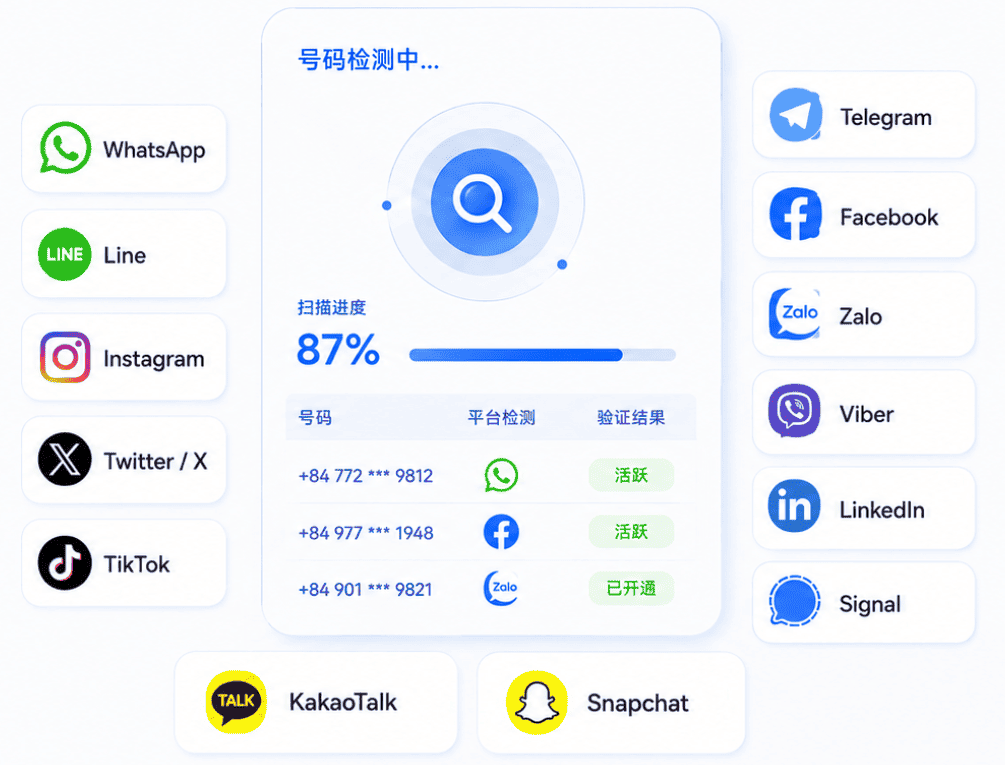
In the actual screening process, Amman can process the dimensions of device type, operator, and activity in the same process. By filtering once, multiple conditions can be filtered at the same time without the need for step-by-step operations.
It also supports batch detection and API access, and can be directly embedded into existing processes. Before the data is used, multi-dimensional screening has been completed to reduce subsequent repeated processing.
Multi-dimensional filtering makes data closer to real users
When the conditions of device, operator, and activity are used together, the data will gradually change from a mixed state to a clearly structured part.
The purpose of screening is not to increase conditions, but to reduce errors. The more reasonable the combination of conditions, the closer the data is to real available users, and subsequent use will be more stable.
Amman is the world's leading number screening platform, providing global customers with batch number screening and testing services covering 236 countries. The platform currently supports more than 40 mainstream social networking and applications, including WhatsApp, Line, Twitter, Facebook, Instagram, LinkedIn, Viber, Zalo, Binance, Signal, etc., adapting to the needs of multiple scenarios.
The main core functions cover multi-dimensional precise screening such as activation, activity, interaction, gender, avatar, age, online, accuracy, empty account, mobile phone device, etc., and can flexibly meet the needs of different users. Its core advantage is to integrate global mainstream social and application resources to provide users with one-stop, real-time and efficient number precision screening services, helping customers achieve global digital layout.
It is a common choice for all professional teams to complete rational screening before actually reaching users.
Editor abcheck has a lot of experience, welcome to communicate with me, click to contact @Tg8189